Table Of Content
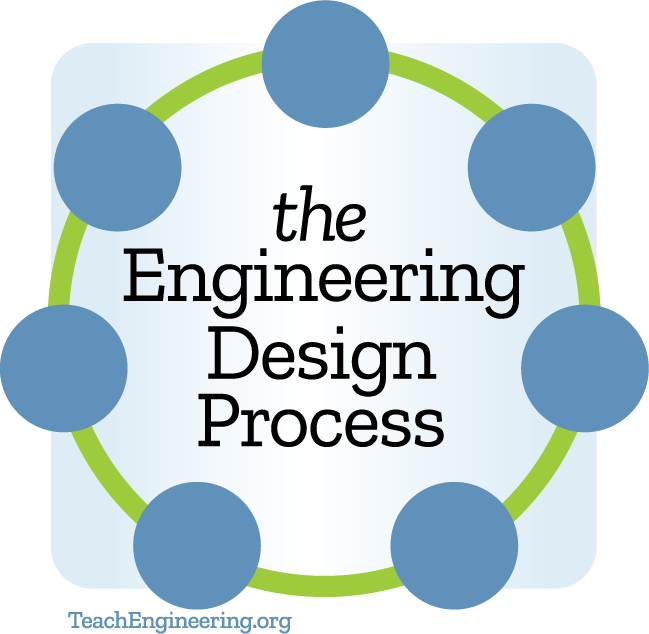
While the process is highly iterative, with parts that may need to be repeated many times before others can begin, it can create the foundation for an incredible final product. Open-ended challenges and projects framed around the engineering design process give students the space to direct their own learning. As students work through a challenge, your role is to guide, ask questions, and point out the various steps of the process.
Tips for using the EDP
Product DesignProduct design is the general process of creation of new products and services. Engineers must understand what needs to be solved and why it is important. The success of a project often hinges on how well this stage is conducted. This can be in the form of a report, presentation, display board, or a combination of methods. Thorough documentation allows your finished product to be manufactured to the required quality standards. Testing and evaluation allows you to see where any improvements are needed.
Quality Control and Assurance
However, attrition and talent loss pose significant risks for such teams, potentially derailing the product development process and delaying time-to-revenue. Moreover, a reliance on trial and error has been prevalent in this approach. Teams typically design, build, and test products, iterating designs through trial and error until meeting target specifications. Unfortunately, simulation tools and technologies are rarely utilized in such scenarios, resulting in sluggish, error-prone processes unsuitable for businesses aiming to develop and launch products regularly. Students are introduced to the concept and steps of the engineering design process and taught how to apply it. In small groups, students learn of their design challenge (improve a cast for a broken arm), brainstorm solutions, are given materials and create prototypes.
What is the engineering design process?
For example, you may be required by your parents to receive good grades. At the same time, you may be constrained by other activities such as work, sports, sleep, spending time with friends, and so on. Although worthwhile, these time constraints may impinge on the amount of time you have to study.
Trial and erroneous product development
In addition to research and development efforts, teams can leverage such tools to simulate and optimize product performance. Key use cases include fluid dynamics analysis for industrial equipment manufacturers, enabling them to understand flow patterns, pressure distribution, and turbulence profiles. Additionally, STAR-CCM+ facilitates multiphysics simulations, predicting and analyzing the interaction between fluid flow, heat transfer, structures, and other physical phenomena. Back to our engineering project — our final step today is to develop a project definition within each of our design teams. This includes relating the project's problem or need to some aspect of our personal lives. Ultimately, we want to design something that would help us if we were experiencing the same problem or need as our target population.
Test and improve: Make it better
Applying Six Sigma to design - PlasticsToday
Applying Six Sigma to design.
Posted: Tue, 05 Dec 2023 17:31:47 GMT [source]
Students follow the steps of the engineering design process to design an improved smartphone case. As if they are materials engineers, they evaluate how to build a smartphone case and study physical properties, chemical properties, and tessellations. Students are challenged to design, build and test small-scale launchers while they learn and follow the steps of the engineering design process. For the challenge, the "slingers" must be able to aim and launch Ping-Pong balls 20 feet into a goal using ordinary building materials such as tape, string... Students design and create sensory integration toys for young children with developmental disabilities—an engineering challenge that combines the topics of biomedical engineering, engineering design and human senses. Students learn the steps of the engineering design process (EDP) and how to use it ...

After their tests, they develop ideas to control the spread of germs within the classroom. The engineering design process begins by defining a problem and completing background research on the problem. If the solution built meets the requirements then the results can be shared. If the solution does not meet all the requirements then another solution is thought of and tested. Each iteration should use the data from the previously tried solution to meet all of the initial requirements. The real value of Simcenter STAR-CCM+ for small and medium-sized manufacturers lies in developing in-house capabilities.
The EDP in action
The TeachEngineering hands-on activities featured here, by grade band, exemplify the engineering design process. Design requirements state the important characteristics that your solution must meet to succeed. One of the best ways to identify the design requirements for your solution is to analyze the concrete example of a similar, existing product, noting each of its key features.
Specify Requirements
Engage in the process of how real engineers design products to meet a desired function. The design process involves multiple iterations and redesigns of your final solution. You will likely test your solution, find new problems, make changes, and test new solutions before settling on a final design. The interactive diagram below may help you understand the engineering design process, and how it is applied to an experiment or project.
Students practice human-centered design by imagining, designing and prototyping a product to improve classroom accessibility for the visually impaired. Student teams follow the steps of the engineering design process to formulate their ideas, draw them by hand and using free, online Tinkercad softwa... Students further their understanding of the engineering design process while combining mechanical engineering and bio-engineering to create assistive devices.
In this two-part activity, students design and build Rube Goldberg machines. This open-ended challenge employs the engineering design process and may have a pre-determined purpose, such as rolling a marble into a cup from a distance, or let students decide the purposes. Students learn more about assistive devices, specifically biomedical engineering applied to computer engineering concepts, with an engineering challenge to create an automatic floor cleaner computer program. Following the steps of the design process, they design computer programs and test them by pr...


No comments:
Post a Comment